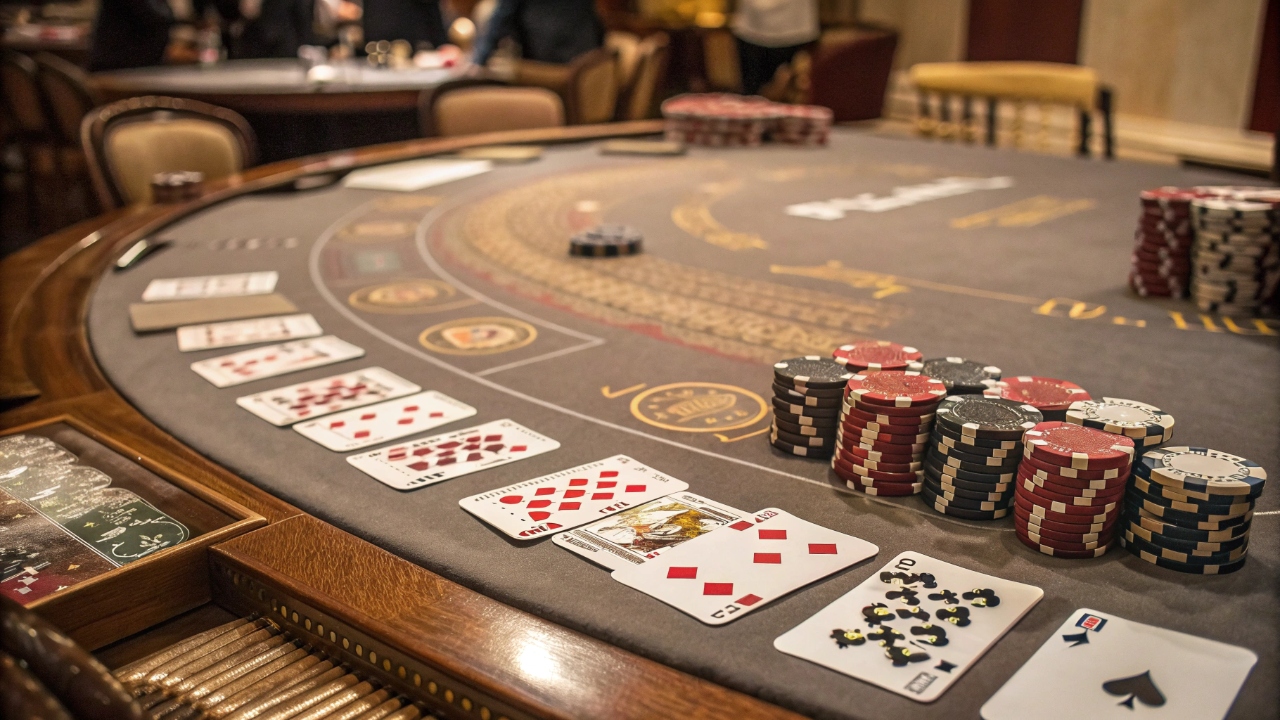
Blackjack is often described as a game of balance between probability and discipline. Unlike slots, every decision here has a noticeable impact on long-term results, which means strategy selection is not a formality but the foundation of the entire session. The most common mistake beginners make is searching for a “universal secret” that guarantees a win. A professional approach is different: the player adapts a system to their bankroll, pace, psychological profile, and the rules of a specific table. This kind of setup helps reduce chaotic decisions and maintain control even during long stretches of hands.
Why Strategy in Blackjack Matters More Than Intuition
Intuition may help over short intervals, but mathematics wins over the long run. In blackjack, every action is tied to probabilities: hit, stand, double down, or split. When decisions are driven by emotion, players often overestimate successful moments and underestimate regular small losses. As a result, they develop the false impression that an aggressive style brings more profit, even though statistics show the opposite.
Professionals rely on basic strategy because it minimizes the house edge within the allowed rules. It is not “magic” and not a promise of constant profit, but a practical way to avoid the most expensive mistakes. It is important to understand that strategy works only when applied consistently. If a player starts deviating after a few losing hands, they return to impulse-based play and lose their main control tool. So choosing a strategy is, above all, choosing a decision system you are ready to follow without emotional exceptions.
How to Match Your Style to Bankroll and Table Format
There is no single strategy that fits everyone, because players have different goals and financial limits. One player aims for a long session with moderate risk, while another prefers a faster pace and accepts higher volatility. In both cases, bankroll management is the key parameter. If bet size is not aligned with the total session budget, even technically correct decisions will not prevent a quick exit from the game.
The rules of a specific table are just as important. The number of decks, dealer rules on soft hands, and limits on doubling or splitting directly affect expected outcomes. Experienced players evaluate the rule set first and only then choose tactics. In practical terms, this means strategy should be flexible within mathematical logic: you do not change your core approach every hand, but you adapt it to the conditions where you play. This approach delivers more stable results than trying to force luck with the same style across different formats.
Decision Psychology: How Not to Break Your Strategy During a Streak
Even a strong system stops working when a player loses emotional control. In blackjack, the hardest part is often not choosing the move, but staying disciplined after a losing streak or, on the contrary, after a sharp bankroll increase. In the first case, the urge to chase losses appears, often leading to unjustified bet increases. In the second, overconfidence pushes players toward risky deviations from the plan. Both scenarios end the same way: the system collapses, and decisions become random.
Professionals set session boundaries in advance for time, limits, and acceptable bankroll swings. This reduces psychological pressure and helps keep decisions in a “cold,” rational state. It is important to treat each hand as part of a long horizon, not as a critical moment where you must immediately prove yourself right. When a player thinks in series rather than isolated bursts of luck, strategy becomes a working instrument instead of theory on paper.
What Ultimately Separates a Working Strategy from a Nice Idea
A working blackjack strategy is always tested on three levels: mathematical validity, compatibility with bankroll, and psychological feasibility. If even one element is missing, the system starts to fail. That is why professionals do not chase exotic schemes. They build a simple, repeatable algorithm that can be applied consistently in real play.
Over short and medium horizons, success more often looks like controlled loss reduction and risk management than a streak of big wins. The paradox is that this “calm” style creates a stronger foundation for improving overall skill. Choosing the right strategy is not about trying to outsmart the casino; it is about making probability-based decisions without emotional breakdowns. When a player combines math, discipline, and a realistic assessment of their limits, blackjack stops being chaotic entertainment and becomes a manageable intellectual game.